
Never Worry About Golf Swing Wrist Hinge Again (The Simple Feel for Pure Strikes)
If you have spent any time on the range or watching golf instruction online, you have probably been told to build the classic “L-to-L” swing.
You are told to set your wrists early, point the butt of the club at the ball, hold an extreme flat or bowed wrist at the top, and “create lag.”
Here is the harsh reality: trying to actively hinge your wrists is one of the most destructive things you can do in a golf swing.
A golf swing takes roughly one second. When you try to micromanage your wrist angles during that split second, you introduce tension, disconnect your arms from your torso, and force your hands to frantically flip at impact just to save the shot.
You don’t need more wrist mechanics. You need less manipulation.
Below is the simple breakdown to eliminate the wrist-hinge anxiety, stabilize your clubface, and hit repeatable, pure golf shots with effortless flow.
The Big Lie About Wrist Hinge in the Golf Swing
Most amateur golfers do not suffer from too little wrist hinge—they suffer from too much, too soon.
When you stand over the ball with tension or over-focus on setting the club, your wrists snatch the club up early. The swing becomes narrow and cramped. Because the hands and arms did all the work, your larger core muscles never actually wound up.
From that cramped position at the top, your arms have to work twice as hard to pull the club back down and square the face before impact.
The result?
-
Thin strikes and heavy chunks.
-
Inconsistent face angles that spray the ball left and right.
-
A massive loss of effortless clubhead speed.
The truth is, you do not need to actively intend to hinge your wrists. When your body rotates correctly, momentum and gravity will naturally load the club for you.
Step 1: Let the Setup Dictate Your Hands (Zero Manipulation)
Consistency starts before the club ever moves away from the ball.
Many golfers manipulate their hands at address—pushing them way forward toward the target or tucking them back behind the ball. Every awkward adjustment you make at setup forces an equal and opposite compensation during the swing.
The Fix:
-
Stand tall, set your posture, and let your arms hang completely naturally from your shoulders.
-
Align your pelvis and upper body so your hands sit in a relaxed, neutral position.
-
Stop fidgeting with the grip or trying to force artificial shaft lean before you start.
When your setup is neutral, your wrists don’t have to work overtime to correct mistakes on the way down.
Step 2: The “Heavy Arms” Takeaway Feel
If you want a takeaway that is wide, smooth, and repeatable, use the Heavy Arms sensation.
Instead of thinking about wrist angles:
-
Feel as though your arms are heavy, relaxed ropes hanging from your shoulders.
-
Focus purely on turning your chest, hips, and core back.
-
Allow your arms and the club to simply follow your body turn.
Because your arms feel heavy and relaxed, the natural weight of the clubhead will create the exact amount of hinge your swing needs—without you ever forcing it. You get a wide radius, effortless leverage, and zero tension.
Step 3: Body-Driven Propulsion (No Flipping at Impact)
How do you generate speed without snapping or flipping your wrists?
Think of throwing a ball. You wouldn’t stand stiff and flick your wrist at the target. You would step, rotate your core, and let your arm whip through naturally.
The golf downswing works the exact same way:
-
Initiate the downswing by unwinding your body toward the target.
-
Let the hands naturally lead the clubhead into the strike.
-
Maintain the passive “heavy arms” feeling and let the club release naturally through the ball.
When your body drives the sequence, your wrists remain stable, the clubface stays square through the hitting zone, and you strike the ball with clean, crisp compression.
————————-
Frequently Asked Questions
Should I actively hinge my wrists in the golf backswing?
No. Actively trying to hinge the wrists often causes an over-hinged, narrow backswing that leads to casting and flipping. Instead, focus on a smooth body turn with relaxed, heavy arms; momentum will naturally hinge the wrists the correct amount.
How do I stop flipping my wrists at impact?
Flipping occurs when the arms outrace the body or try to manufacture speed independently. To stop flipping, rotate your hips and chest through toward the target, allowing the body to pull the handle through impact ahead of the clubhead.
What is the simplest swing thought for pure iron contact?
Focus on “heavy arms and body turn.” Keep your arms relaxed at address, turn your shoulders back smoothly, and let your body rotation pull the club through impact without micromanaging your hands.
Ready for a Simple, Repeatable Golf Swing?
Stop wrestling with conflicting tips, complex mechanics, and endless swing thoughts.
If you want a step-by-step, body-friendly swing framework that restores clean contact, effortless power, and lasting consistency:
👉 Discover The Simple Golf System Here
-
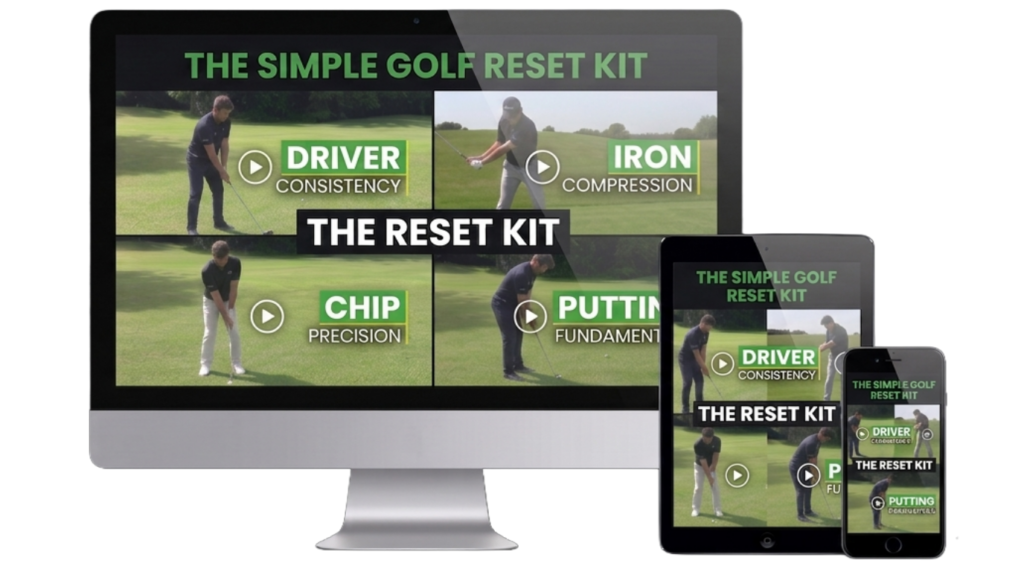
The Quick Fix ($9): Grab The Simple Golf Reset Kit our fast-acting, 5-video emergency protocol to recalibrate your setup, driver, irons, short game, and putting.
-
The Complete System ($97): Ready to build a repeatable, single-path swing from scratch?
Check out The Simple Swing Formula Masterclass to eliminate mid-swing compensations for good. -
The All-Access Pass ($247): Unlock our entire digital vault of courses, masterclasses, and specialized blueprints with The Simple Golf Club Library Pass.
————————————————————————————
Need an Emergency Swing and Game Reset?
The Simple Golf Reset Kit provides a fast-acting, 5-video protocol to recalibrate your setup, driver, irons, short game, and putting. No complex theories or rigid mechanics—just simple, body-friendly adjustments that get you back to hitting crisp, clean shots on target.
Click Here to Grab The Simple Golf Reset Kit for $9




Leave A Comment