
The Lazy Golfer’s Setup Tweak for Longer, Straighter Drives
Quick Summary (Key Takeaways for Instant Fixes)
-
Drop the trail foot back 3 inches and flare the toe open 45 degrees to instantly clear pelvic restriction and create space for an inside-out downswing.
-
Move ball position slightly back—roughly 1 to 2 driver head widths inside your lead heel (matching a 3-wood or long iron)—so you don’t lunge forward to reach it.
-
Keep your shoulders relatively level rather than tilting aggressively backward to avoid bottoming out early in the turf.
-
Tee the ball slightly higher to encourage an upward strike and an effortless high draw.
If you have tried forcing extra hip turn, holding artificial “lag” with your wrists, or swinging harder only to watch your drive spin high and leak into the right rough, you are fighting your own anatomy.
Most everyday golfers do not lack clubhead speed; they lack space.
When tight hips or restricted spinal mobility prevent you from making a complete turn, your body instinctively takes the path of least resistance: your upper torso lunges toward the target, your hands throw the club over the top, and you chop down across the ball with a steep, glancing strike.
You don’t need a grueling mobility routine or 40 mechanical swing thoughts to hit high-launching, rolling draws. You just need a simple address adjustment that clears space for your body to turn freely and drops the club on the correct inside-out path.
The 3-Inch Setup Tweak: Instant Hip Clearance
The core of this adjustment occurs entirely at your trail foot:
-
Step into your regular driver stance.
-
Pull your trail foot back approximately 3 inches behind your target line.
-
Flare your trail foot open to roughly 45 degrees.
Why This Works (Especially for Mature Players)
When your trail foot is set completely square, tight hips act as a physical wall. Your pelvis cannot rotate fully without putting intense torque on your lower spine.
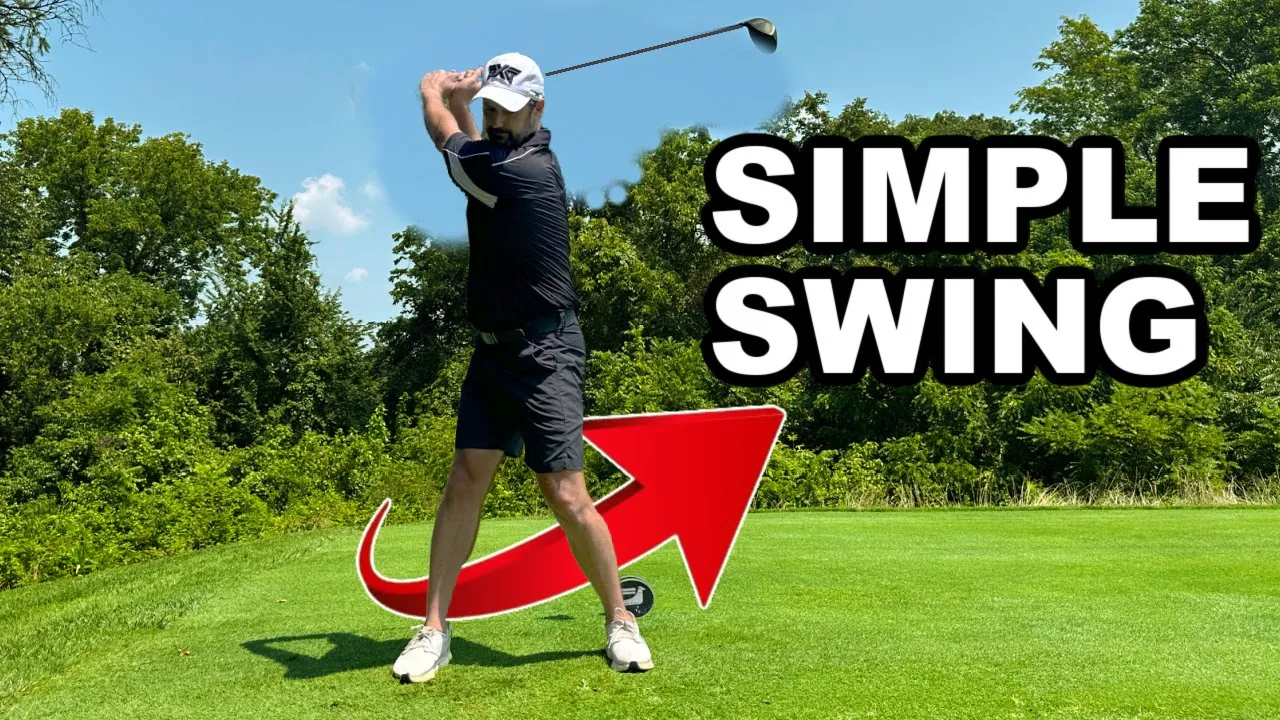
By flaring the trail foot and pulling it back, you preset your pelvis into an open rotation channel. This allows you to wind up behind the ball with zero strain, giving your arms the freedom to drop from the inside on the downswing rather than getting pushed out-to-in.
The Ball Position Adjustment Most Golfers Miss
Pulling your trail foot back changes your swing plane and shifts your low point slightly rearward. If you leave the ball teed way out off your front big toe, your upper body will instinctively lunge forward to chase it down—instantly reintroducing an over-the-top path.
To keep your release clean:
-
Move the ball back slightly: Position it roughly one to two driver clubhead widths inside your lead heel (similar to where you would play a 3-wood or long iron).
-
Tee the ball a fraction higher: This encourages you to sweep up on the ball from the inside slot.
Because your trail foot is set back, placing the ball slightly further inward positions it exactly where your clubhead is traveling from in-to-out and releasing toward the target.
3 Critical Checkpoints for Maximum Draw Power
1. Avoid Excessive Upper-Body Tilt
Do not confuse getting behind the ball with leaning your spine backward. If your shoulders tilt aggressively toward your trail side, the clubhead will bottom out in the turf behind the tee. Keep your shoulders relatively level; let the foot drop create the upward attack angle naturally.
2. Swing the Arms with Freedom, Not Force
You do not need to muscle the ball. Because your lower body has preset space, focus on letting your arms swing freely through impact. The club will naturally travel along an in-to-out path without forced manipulation.
3. Embrace the Initial Hook
On your first few practice swings, you might hit an aggressive draw or even a hook. This is completely normal—and a great sign that you have stopped holding the face open or swinging out-to-in. After a few swings, your hands and body will naturally sync into a smooth, high draw with heavy roll-out.
Step-by-Step Range Protocol
Frequently Asked Questions
Can I use this dropped-foot setup with irons?
An extreme 3-inch drop with irons promotes an inside-out sweep and an upward attack angle. With irons, you need a descending strike to compress the turf, so reserve this specific setup modification for your driver, 3-wood, and hybrids.
Why does this fix an over-the-top driver slice?
Most over-the-top swings happen because the golfer runs out of hip rotation going back and compensates by casting the club with the shoulders. Presetting the trail foot back clears instant hip depth, allowing the hands and club to drop straight down into the slot.
Won’t moving the ball back cause me to hit down on the driver?
No. Because your trail foot is pulled back, your center of gravity and low point shift rearward as well. Moving the ball back 1 to 2 clubheads places it directly at the start of your upward release arc.
Need to Pinpoint Your Exact Swing Fault?
Every golfer’s swing profile and mobility are unique. Take our quick, 60-second interactive assessment to get your personalized swing roadmap:
👉 [Take the 60-Second Swing Assessment Here]
(Or join 16,000+ golfers on our Weekly Dispatch to get one practical, no-fluff lesson delivered straight to your inbox each week.)



Leave A Comment